
AUTOMAVIS (AMV) is a spin-off of Centre for Research and Technology Hellas (CERTH) and its Information Technologies Institute (ITI). The company operates in the field of automated quality inspection and integrated machine vision systems.
AMV specializes in delivering customized, end-to-end quality control solutions for industrial environments, designing and implementing complete pipelines for data acquisition, analysis, and visualization.
FEATURES/BENEFITS
What we do
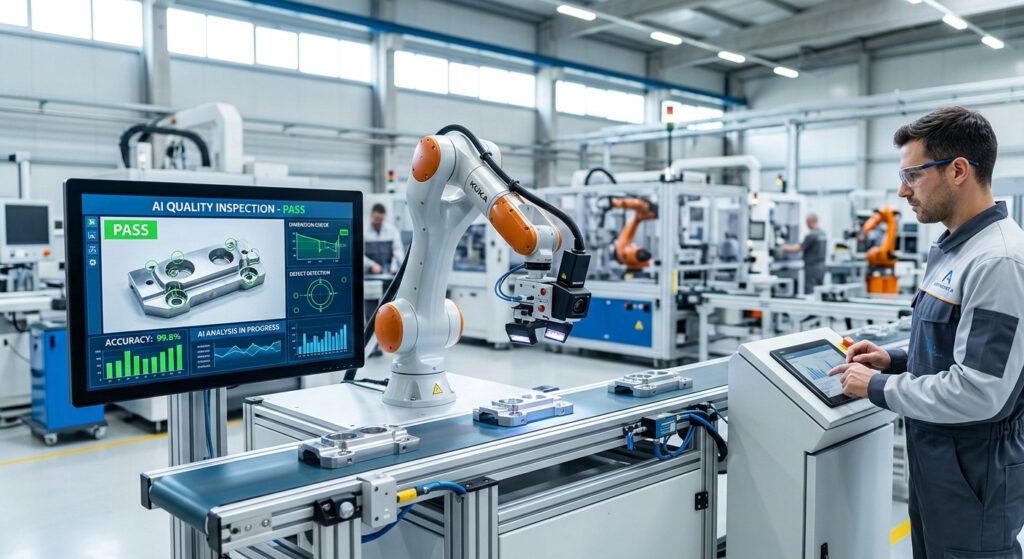
Automated and (near) real-time quality control
on par with human performance. The target for quality control accuracy highly depends on the characteristics of each production line or business process, but AUTOMAVIS will replace manual inspection with automated one matching or even surpassing human operators.
High modularity
in order to enable fast and agile solution development while supporting integration with customers’ existing business logic.
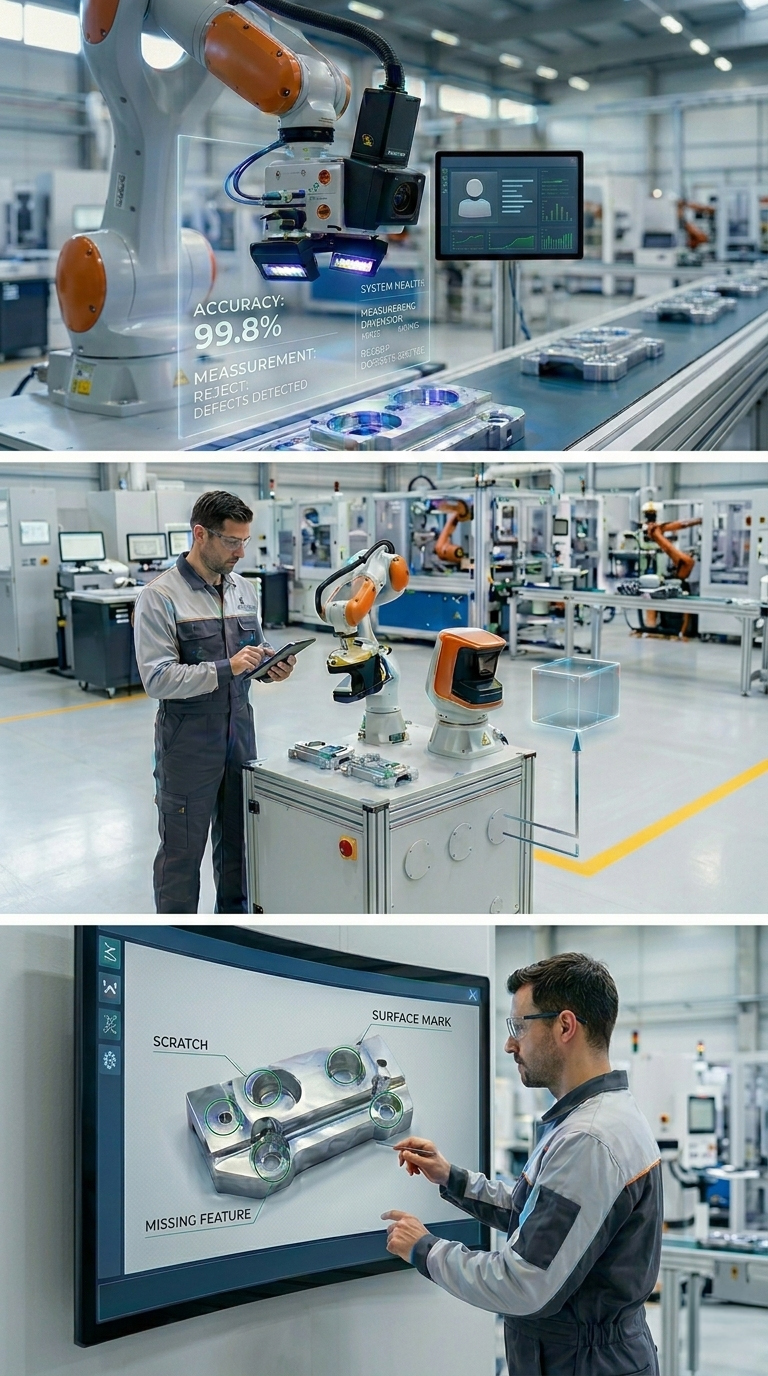
Faster deployment and lower annotation costs
via smart visualization and efficient machine-operator visual interaction. In this direction, an innovation that AUTOMAVIS will commercialize is online AI systems that through visual interaction with a human operator learn over time and become self-sufficient.